UV DTF
UV DTF vs UV flatbed for hard goods: when each one makes money
UV DTF is useful for curved and awkward objects, but UV flatbed should stay the center of the catalog for rigid, flat and premium substrate work.

UV DTF is useful for curved and awkward objects, but UV flatbed should stay the center of the catalog for rigid, flat and premium substrate work.

If the product is flat, rigid and valuable, start with UV flatbed. If the product is curved, irregular or awkward to fixture, consider UV DTF. Both can make money, but they solve different production problems. Treating UV DTF as a replacement for every flatbed job usually creates unnecessary film cost and slower finishing.
Drinkware wraps, bottles, phone cases with curves, small gifts, irregular promotional products and textured hard goods are natural UV DTF jobs. The transfer workflow lets the shop decorate surfaces that would be slow or risky to hold on a flatbed.
Flatbed printing gives direct control over rigid media, supports larger panels, uses no transfer film, and is easier to connect to sign, award, packaging and industrial work. For a serious equipment catalog, UV DTF should support the product mix, while flatbed remains the foundation.
Start here, then ask us to narrow the configuration around your media size, monthly volume and workflow.
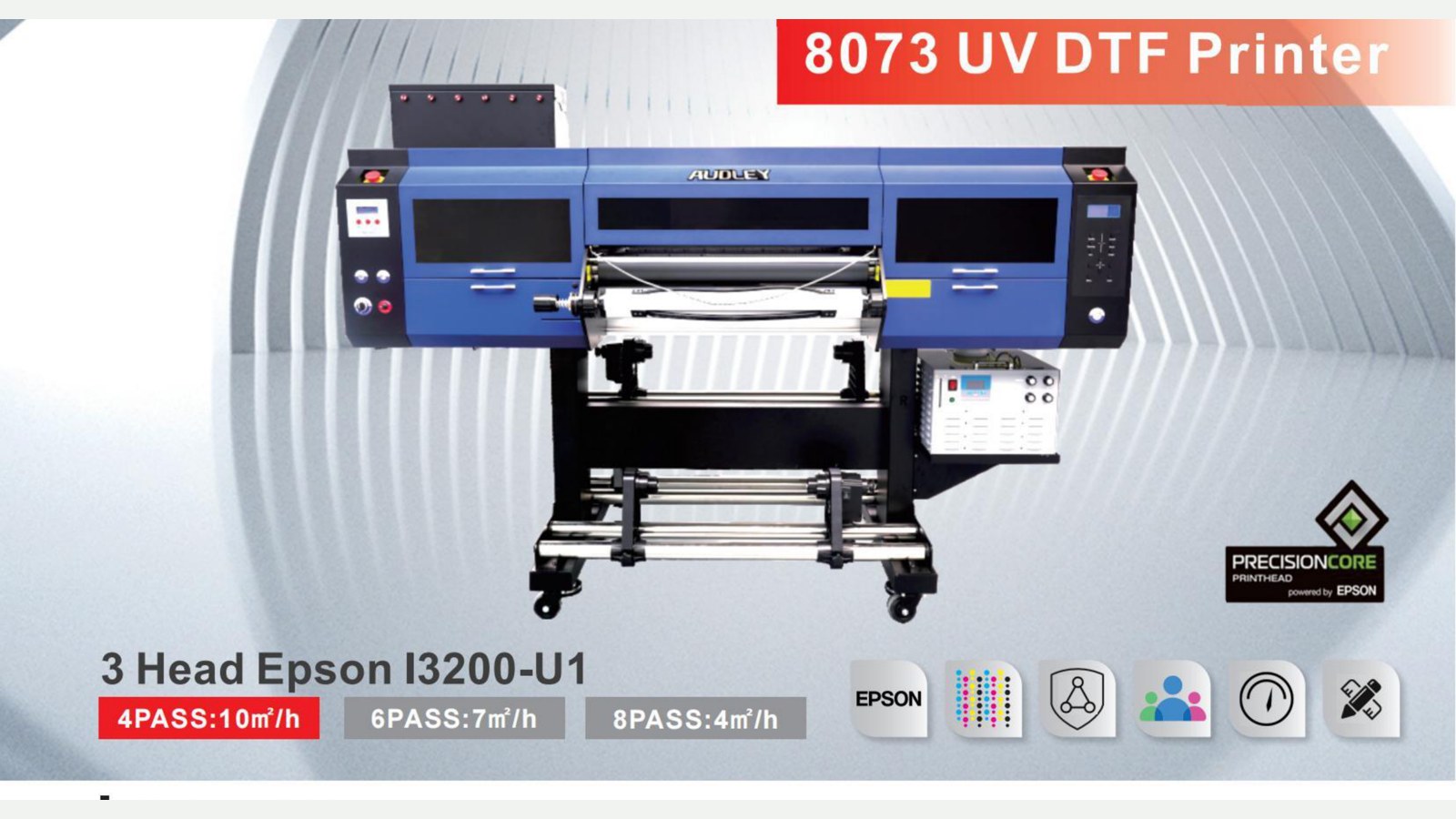
UV DTF lets you sell durable full-color transfers for cups, packaging, gifts, helmets, electronics and irregular products without printing directly on each object.
From $9,900View details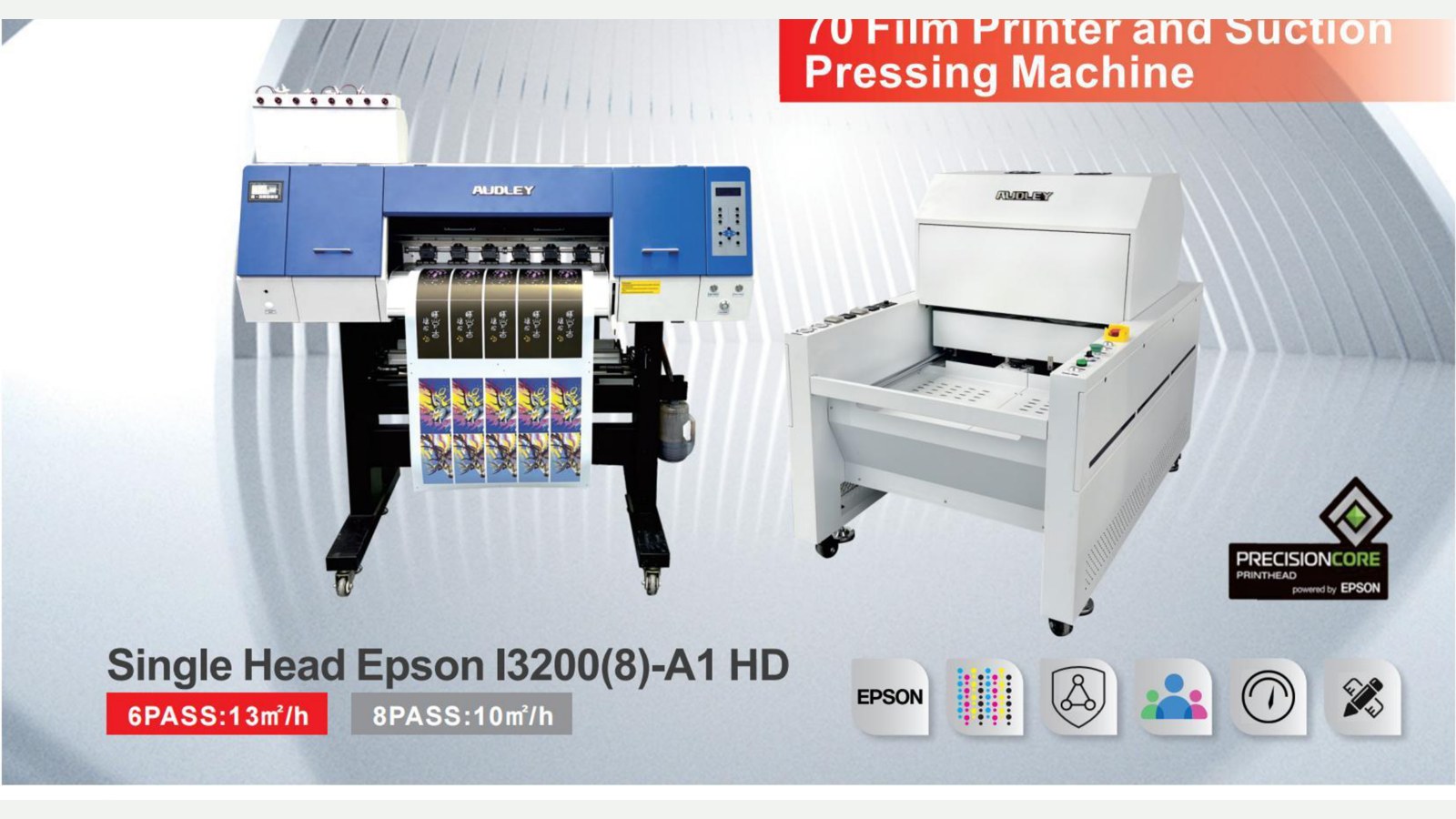
A 70 film line is for shops that already know UV DTF demand exists and need more width, steadier film handling and a cleaner transfer workflow.
From $12,900View details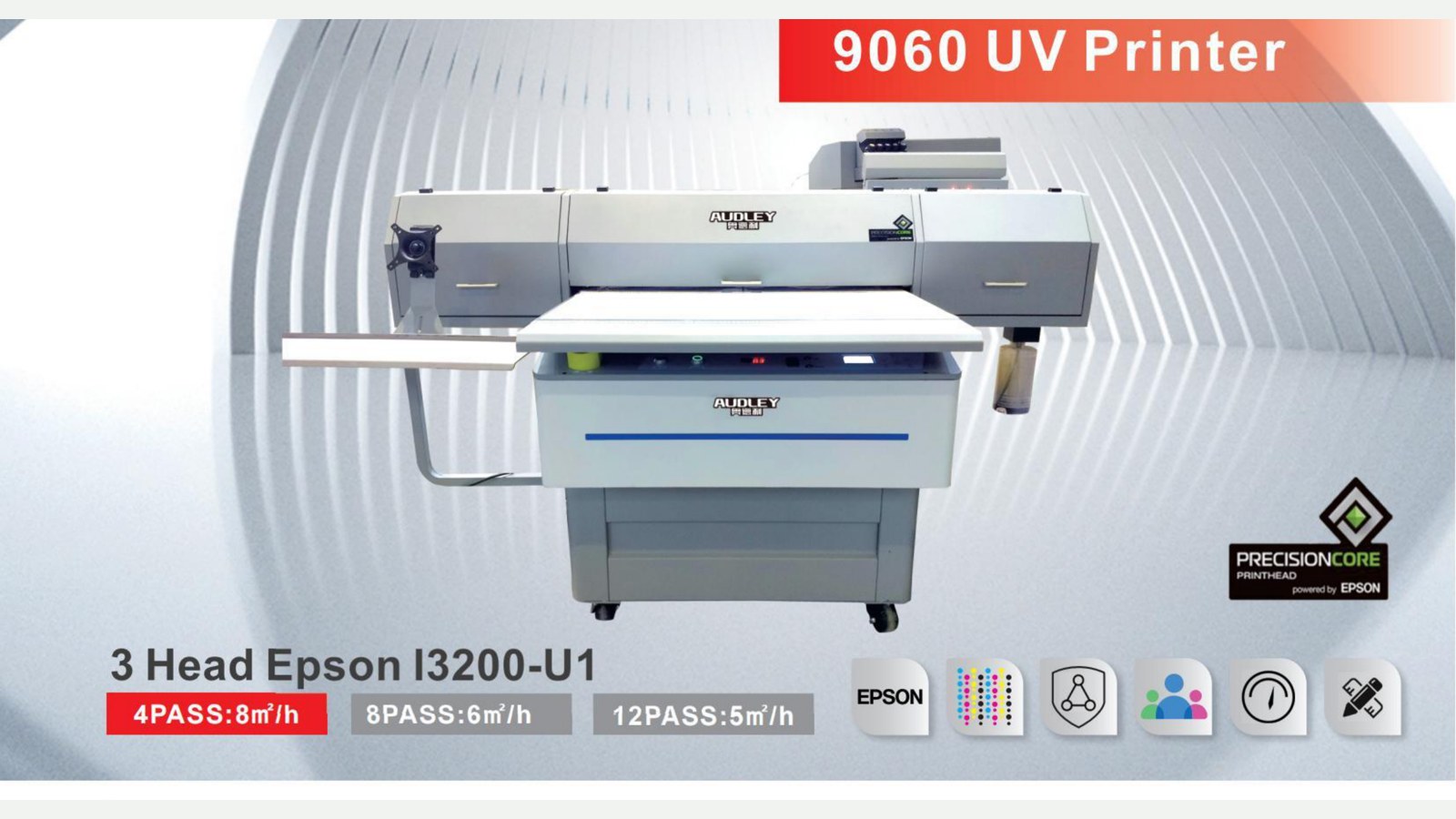
Three Epson I3200-U1 heads give the UV9060 the speed and print quality small shops want without the capital load of a premium-brand flatbed.
From $8,900View details